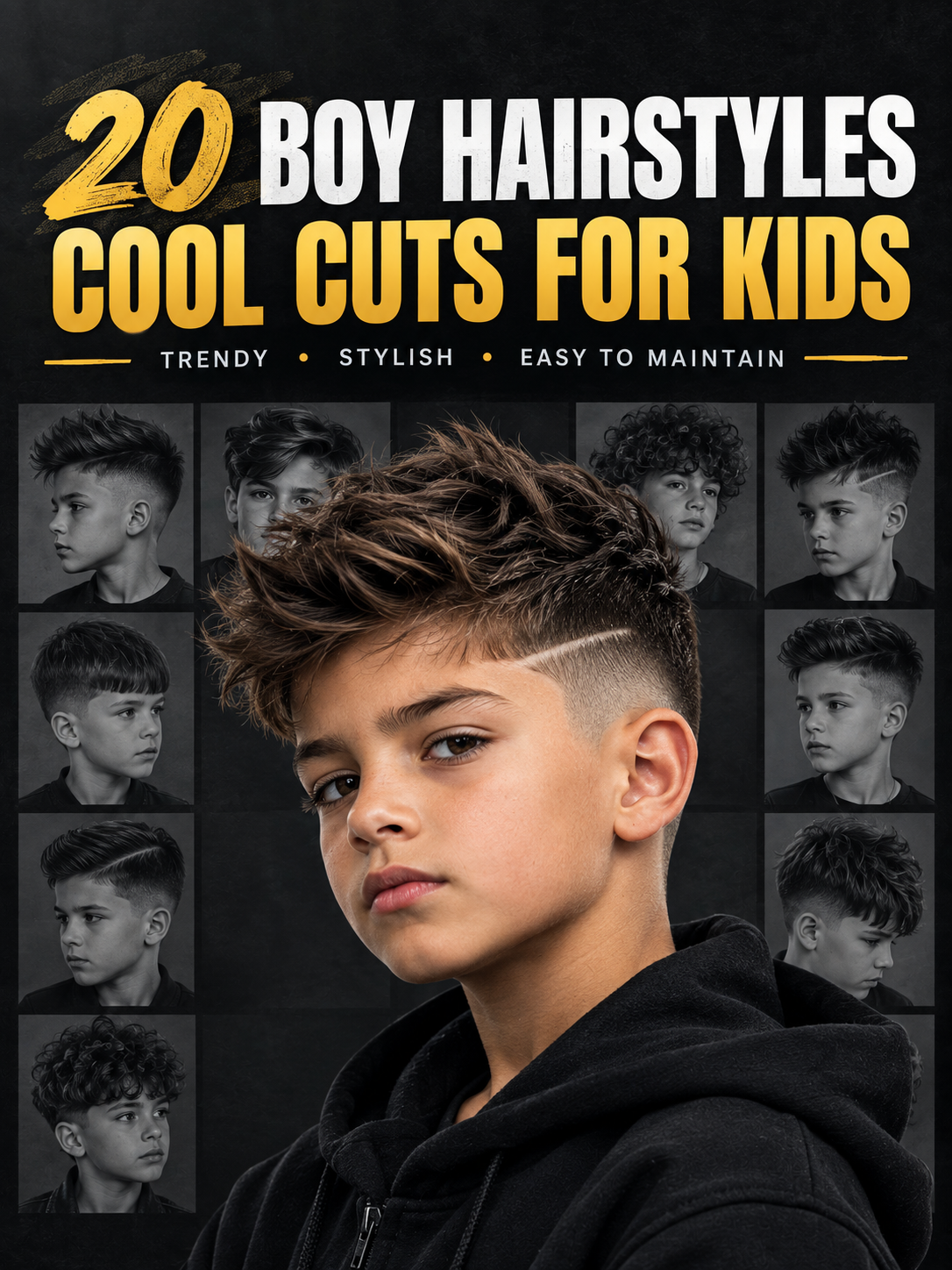
1. Classic Short Haircut
The classic short haircut is one of the easiest and most timeless hairstyles for boys. The sides and back are trimmed short, usually with a number 3 or 4 clipper guard, while the top stays around 1.5 to 2 inches long. It keeps the hair neat and comfortable, and works well for school, family events, and everyday activities.
- Short sides and back keep the style clean and grow out softly between trims
- A slightly longer top gives the hair a natural shape that can be pushed forward or to the side
- Works well with straight, wavy, or lightly textured hair, and thick hair can be thinned on top so it doesn’t puff up
Parents often choose this haircut because it needs almost no styling on busy school mornings. A quick run of the fingers or a comb is usually enough. For special occasions like weddings or Eid, a small amount of light hair cream and a soft side part make it look more polished. It’s best to skip heavy, shiny gel, which can make a short cut look stiff.
Since kids’ hair grows fast, a trim every 4 to 6 weeks keeps the sides neat and away from the ears. Bringing a photo to the barber also helps, because “short” can mean different things to different people.
The classic short haircut is a great choice for parents who want a simple, clean, and versatile boys’ hairstyle that looks smart without looking overly styled .

2. Textured Crop
The textured crop is the haircut you’ll see on a lot of boys walking out of modern barbershops right now, and it’s easy to see why. It looks effortlessly cool, it hides a lot of bad hair days, and it takes almost no time to style.
The idea is simple: short sides, a fringe that falls forward onto the forehead, and a top that’s been cut with texture rather than left as one flat length. Barbers use a technique called point cutting, where they snip into the ends of the hair rather than straight across. That creates little choppy pieces that separate and move, so the hair looks full and slightly messy in a deliberate way.
What to tell the barber: “Skin or number 1 fade on the sides, about 2 inches on top, cut forward with plenty of texture, and a short, choppy fringe above the eyebrows.”
This crop works especially well for boys with thick, straight hair or hair with a slight wave, because the texture shows up clearly. On very fine hair it can look thin, so ask for a slightly longer top to add bulk. It’s also a smart choice for boys with a high forehead, since the fringe balances out the face.
Styling is refreshingly low effort. Rub a small amount of matte paste or sea salt spray through damp hair, scrunch it with your fingers, and push everything forward. That’s it. The only thing to watch is fringe length. Once it starts touching the eyebrows, it gets in the eyes during sports and class, so plan a trim every 3 to 4 weeks.
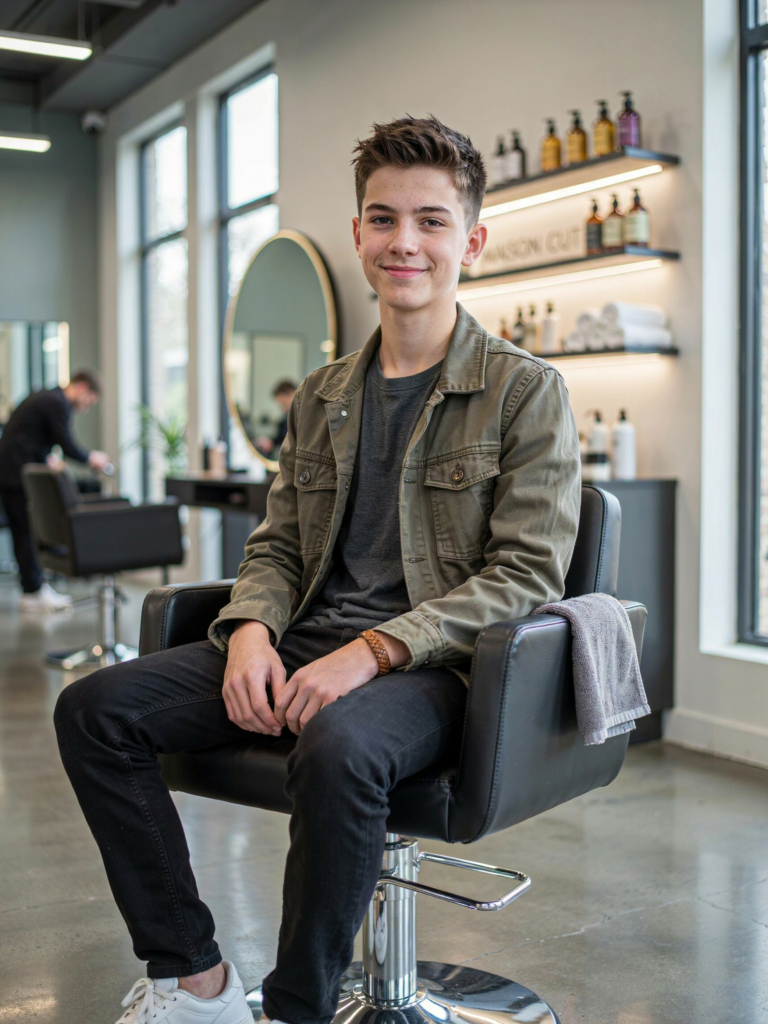
3. Low Fade With Textured Top
If you like the look of a fade but worry that a high one might be too bold for school, the low fade is your answer. The fade starts just above the ears and runs down around the back of the neckline, so most of the sides keep some length. The result is clean and modern without looking harsh.
Pairing it with a textured top gives the style personality. Instead of a smooth, combed look, the top is left a little longer, usually 2 to 3 inches, and cut to have movement and separation.
Why this combination works
- It’s balanced. The low fade keeps the sides neat while the top gets the attention.
- It’s school friendly. Because the shortest part sits low, it rarely clashes with strict dress codes.
- It grows out well. A low fade softens gradually instead of looking shaggy after two weeks.
Hair types and face shapes
This style is forgiving. Straight, wavy and even loosely curly hair all work, since the textured top suits natural movement. Boys with oval or square faces look especially sharp with it. For a rounder face, ask for a bit more height on top to lengthen the overall shape.
Daily styling
Apply a small amount of texture powder or clay to dry hair, then use your fingertips to lift and twist small sections. Messy is the goal here, not perfect. On lazy days, it looks fine air-dried with no product at all.
A trim every 3 to 5 weeks keeps the fade crisp, since the shortest areas show growth first.

4. Side Part Haircut
There’s a reason the side part shows up in old family photos and on today’s red carpets: it simply looks smart. For boys, it’s the go-to choice when you want them to look polished for school pictures, weddings, Eid gatherings or formal functions, but it’s easy enough to wear every day.
The cut itself is straightforward. The sides are kept short, either with a taper or a fade, and the top is left long enough to comb over, typically 2 to 3 inches. The part usually sits on the side where the hair naturally falls, which your barber can find by looking at the crown’s growth pattern.
Natural part or hard part? A natural part is simply combed in each morning. A hard part is a thin line shaved in with a razor or trimmer, which makes the part sharp and permanent. Hard parts look great on older boys, but check your school’s rules first, as some schools don’t allow shaved lines or designs.
How to style it:
- Start with damp, towel-dried hair.
- Work in a small amount of light cream or low-shine pomade.
- Use a fine-tooth comb to create the part, then comb the top over to the side.
- Smooth the sides down with your palm.
Straight and wavy hair hold a side part best. Very thick hair may need a slightly stronger product to stay in place until lunchtime.
The side part does need a bit more attention than a crop, since it only looks right when it’s combed. For boys who are old enough to manage a comb themselves, though, it teaches a simple grooming habit and always looks put together.

5. Curly Top With Short Sides
Curly-haired boys often end up with haircuts that fight their texture, usually buzzed short because nobody knew what else to do. Keeping the curls on top and trimming the sides short is a much better approach. It shows off natural texture, looks full and lively, and keeps the overall shape neat.
The key is letting the curls have enough length to form properly. For most boys that means 2 to 3 inches on top. Any shorter and the curls can’t coil, so the hair just looks frizzy. The sides can be a taper, a low fade or a simple short scissor cut, depending on how sharp you want the contrast.
Tell the barber this
“Keep the curls on top at about 2 to 3 inches, shape them into a rounded top, and taper the sides short. Please cut the curls dry if possible.”
Cutting curls dry matters. Wet curly hair stretches, and once it dries and springs back, it can end up much shorter than expected. A barber who works with curly hair will know this.
Caring for the curls
Curly hair is naturally drier, so the routine is different from straight hair:
- Wash with shampoo only 2 or 3 times a week, and use conditioner every time.
- Apply a leave-in conditioner or curl cream to wet hair.
- Scrunch gently with a towel or cotton t-shirt instead of rubbing.
- Never brush curls when dry. Use fingers or a wide-tooth comb in the shower.
This style suits boys with naturally curly or coily hair of any age. It also tends to grow out gracefully, so trims every 5 to 6 weeks are usually enough, with a quick tidy of the sides in between.

6. High Fade With Spiky Top
Some boys want a haircut that turns heads, and this is one of them. The high fade starts up near the temples, so the sides are very short, often down to the skin. Pair that with a spiky top and you get strong contrast, a lot of energy, and a look that feels bold and playful.
This is a great pick for active, confident boys and for summer, when shorter sides keep things cool. It’s especially popular with older kids and teens who have started caring about how their hair looks.
The cut: a high skin or number 0.5 fade blended up into a top that’s roughly 1.5 to 2 inches long. The top should be cut with texture so the spikes separate cleanly instead of clumping.
Creating the spikes:
Apply a small amount of strong-hold matte wax or fiber paste to dry hair. Pinch small sections between your fingers and pull upward, twisting slightly at the ends. Work from the front to the back. Using too much product is the most common mistake. It weighs the hair down and makes the spikes droop by midday.
Things to keep in mind:
- High fades show regrowth quickly. Expect a touch-up every 2 to 3 weeks to keep it looking sharp.
- Thick, straight hair holds spikes best. Fine hair might need a volumizing powder at the roots.
- Because the sides are so short, the scalp can burn in strong sun, so a cap on hot days is a good idea.
It’s not the lowest-maintenance cut on this list, but for a boy who loves a standout style, few haircuts look as fun.

7. Taper Fade With Textured Hair
People often mix up tapers and fades, and it’s worth clearing up because it changes how the haircut looks. A taper only shortens the hair around the sideburns and the neckline, leaving most of the sides with some length. A fade takes the whole side area down gradually, often to the skin. A taper fade sits between the two: soft blending at the edges with a gentle transition up the sides.
That softness is exactly why it works so well with textured hair. Wavy, curly and coily hair keep their natural body, while the tapered edges make the whole cut look clean and deliberate.
| Detail | What to ask for |
|---|---|
| Sides | Low taper, starting around a number 2 and blending up |
| Neckline and sideburns | Tapered close, cleaned with a trimmer |
| Top | 1.5 to 3 inches, depending on curl pattern |
| Finish | Shape the top rounded so it doesn’t look boxy |
For styling, less is more. After washing, apply a light leave-in conditioner or curl cream and let the hair air-dry. For waves, a soft-bristle brush can help define the pattern over time. Avoid heavy gels that leave a crunchy finish.
The taper fade is one of the most school-friendly cuts available, since it looks neat without being dramatic. It also grows out slowly and evenly, so you can usually go 4 to 6 weeks between barber visits. For boys who don’t want a buzzed look but need something tidy, it’s a very reliable choice.
8. Crew Cut
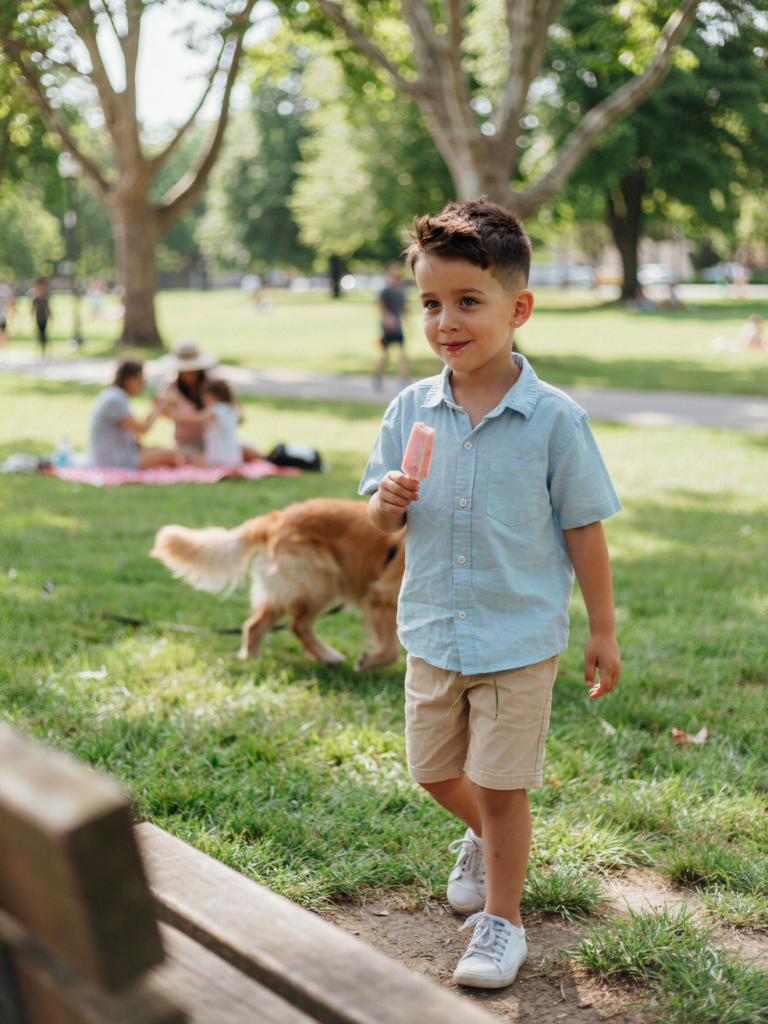
Originally made popular by rowing crews at American universities, the crew cut is proof that a haircut doesn’t need to be complicated to look good. It’s short, clean and practical, which is why it has stayed a favorite with parents for decades.
A crew cut keeps the hair on top short, around half an inch to 1 inch, with the front slightly longer than the crown. The sides and back are clipped shorter and tapered neatly. The slight extra length at the front gives the cut a bit of shape, so it doesn’t look like a full buzz.
Why families choose it:
Mornings get easier, since there’s truly nothing to style. It keeps boys cool during hot summers and sports seasons. Swimming, football and cricket practice won’t mess it up. It also grows out evenly without an awkward in-between stage.
Barber instructions: “Number 3 or 4 on top, slightly longer at the front, tapered down to a number 2 on the sides and back, with a natural neckline.”
The crew cut suits almost every face shape and hair type. Boys with square or oval faces look particularly sharp in it. If your son has a very round face, keeping a touch more length at the front helps add some height.
If he wants a little style, a tiny amount of matte paste can push the front upward into a small ridge. Most of the time, though, the crew cut is a wake-up-and-go haircut. A trim every 3 to 4 weeks keeps the shape intact, since it’s short enough that small amounts of growth show.

9. French Crop
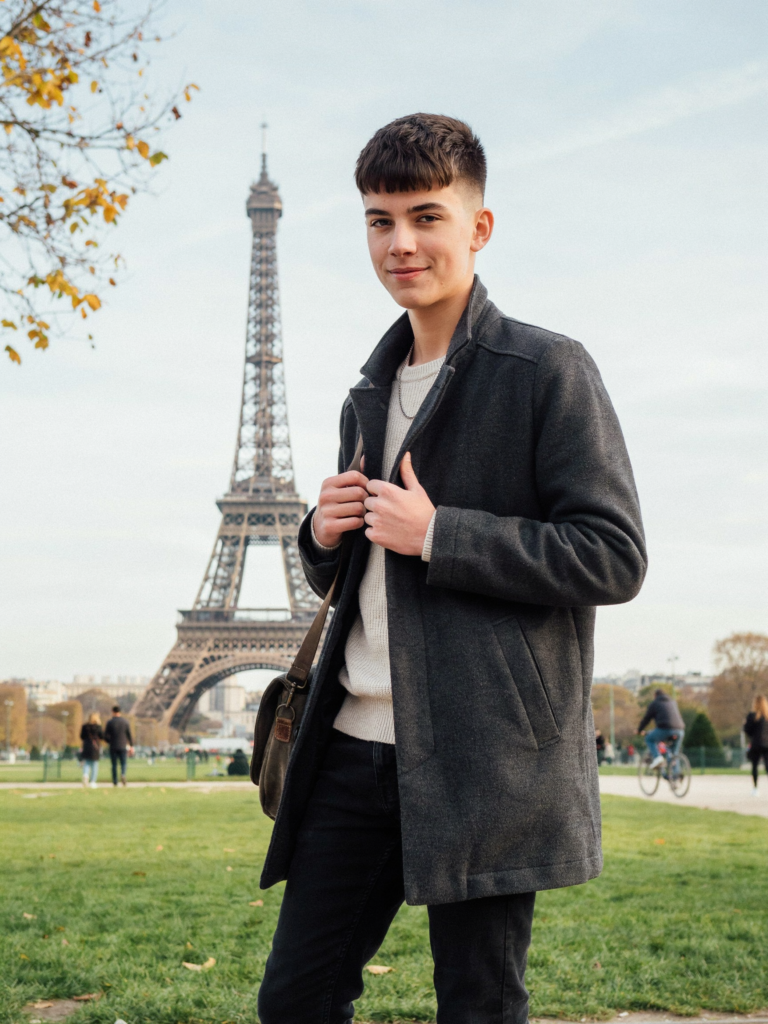
The French crop looks a lot like the textured crop at first glance, and they’re closely related, but there’s one key difference: the fringe. A French crop has a short, blunt fringe cut in a straight line across the forehead, which gives it a clean, structured look. The textured crop, in comparison, is messier and choppier.
The rest of the cut stays simple. The sides are short, often with a fade or taper, and the top is cut to about 1 to 2 inches and combed forward. The result looks neat, a little European, and very modern.
What makes it a good choice:
- It’s easy to maintain. Most days, just comb or finger the hair forward.
- The forward fringe hides a high forehead or a stubborn cowlick at the hairline.
- It works well on straight and thick hair, which holds the straight fringe line nicely.
Ask the barber for: “A French crop with a mid fade on the sides, about 1.5 inches on top, and a short blunt fringe cut straight across, just above the eyebrows.”
Boys with very curly hair might find the blunt fringe hard to keep straight, so a textured crop is usually a better fit for them. Fine hair can also look a bit sparse in this cut. Asking for a slightly longer top adds some fullness.
To style, apply a small amount of matte clay to dry hair, brush everything forward, and gently roughen the top with your fingertips so it isn’t completely flat. Keep the fringe length in check with a trim every 3 to 4 weeks, since a French crop loses its sharp line quickly once the fringe grows out.
10. Ivy League Haircut
The Ivy League haircut got its name in the 1950s and ’60s, when it was the standard look among students at Harvard, Yale and Princeton. It’s sometimes called the Harvard clip, and it still carries that same neat, well-mannered feel today.
Think of it as a grown-up version of the crew cut. The sides and back are short and tapered, but the top is left longer, usually 1 to 2 inches, which is just enough to comb into a side part. That extra length is what separates it from a crew cut and gives it a more refined look.
Tell the barber: “An Ivy League cut, number 2 or 3 tapered on the sides, about 1.5 inches on top, a little longer at the front so I can part it to the side.”
This haircut is a strong fit for older boys and teens who have outgrown the basic kid cuts and want something that looks mature. It’s great for school, formal events and interviews for school admissions or scholarships. Straight and slightly wavy hair work best, since the top needs to lie in a neat direction.
On casual days, just push the top to the side with your fingers. When you want it sharper, use a comb and a small amount of light pomade to define the part and lift the front slightly. Trim every 4 to 5 weeks to keep the taper clean .
11. Messy Fringe Haircut
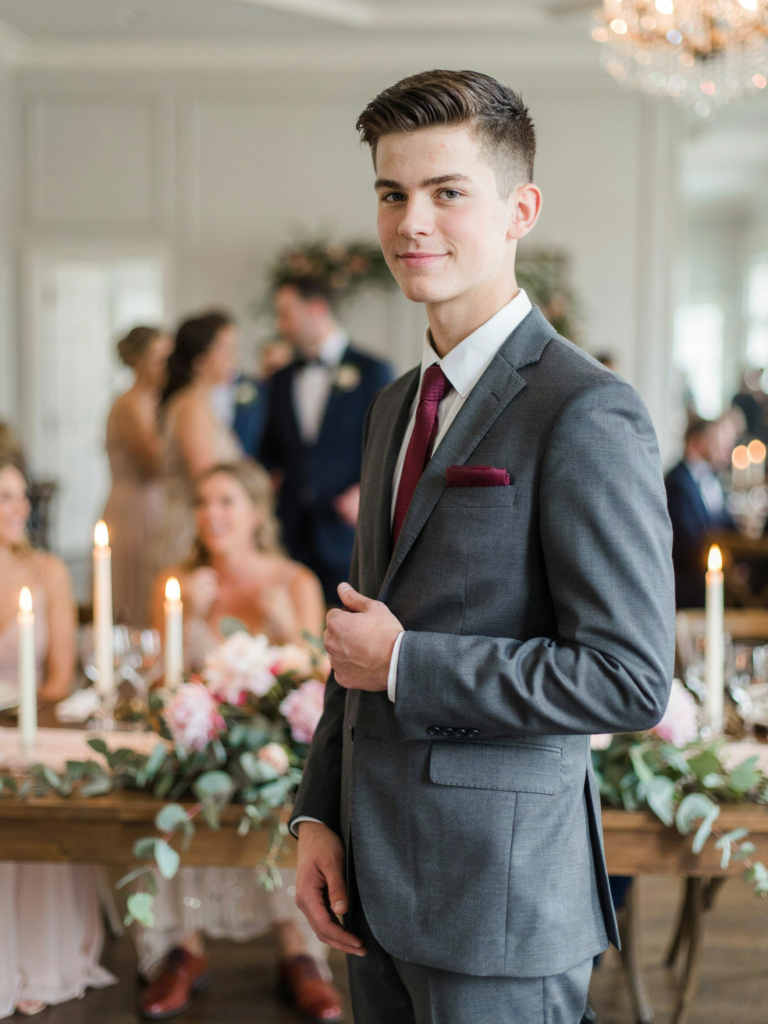
Not every boy wants to spend time in front of the mirror, and the messy fringe haircut is built for exactly that kid. The whole point is that it isn’t supposed to look perfect. The hair on top is longer and cut in uneven layers, then left to fall forward onto the forehead in a relaxed, tousled way.
It has a laid-back, skater-inspired vibe that a lot of boys love, especially those in the 8 to 15 range who are starting to develop their own sense of style.
The cut
- Top: around 2.5 to 4 inches, layered with lots of texture
- Fringe: falling forward, cut unevenly so it looks natural
- Sides: short scissor cut or a low taper, depending on how clean you want it
Styling (barely any)
After a shower, towel-dry the hair and scrunch in a little sea salt spray. Let it air-dry, then shake it out with your fingers. If the fringe gets too heavy, a bit of texture powder at the roots lifts it.
Watch out for
The fringe is the tricky part. When it gets long, it covers the eyes, which is annoying in class and unsafe in sports. A quick fringe trim every 3 to 4 weeks solves this, even if the rest of the cut goes longer. Straight and wavy hair show the messy layers best.

12. Mid Fade With Quiff
A quiff is all about the front. The hair at the front of the head is left longer and styled upward and slightly back, creating a lift that adds height and confidence to the whole look. Put that on top of a mid fade and you have one of the sharpest haircuts on this list.
The mid fade starts around the middle of the sides, roughly in line with the top of the ears. It’s bolder than a low fade but not as dramatic as a high one, so it makes the quiff stand out without going overboard.
Barber script: “Mid skin fade, top left at about 3 inches at the front, getting shorter toward the crown, textured so I can push it up into a quiff.”
This style takes a little work, so it suits older boys who are happy to spend a few minutes on their hair. Here’s how to build it:
- Start with damp hair.
- Blow-dry the front upward and back, using a round brush or your fingers to lift the roots.
- Once dry, work a small amount of medium-hold clay or pomade through the top.
- Shape the front into a soft lift, and leave the back flatter.
Thick, straight or wavy hair holds a quiff best. Fine hair may need a pre-styling spray for extra volume. The fade will need touching up every 3 to 4 weeks, and the top every 5 to 6.

13. Textured Caesar Cut
The Caesar cut is named after Julius Caesar, who is often shown in statues with short hair brushed forward. The modern version keeps that same idea, but adds texture and a cleaner fade on the sides, making it one of the easiest short haircuts for boys to wear.
The top is cut short and even, usually around 1 inch, and brushed forward into a short horizontal fringe. With a textured finish, the barber point-cuts the top so it looks lived-in rather than flat. The sides can be a taper or a fade.
This cut is a quiet favorite with parents for a few reasons. It needs very little styling, it stays in place during active days, and it suits boys with thinning hair at the crown or a strong cowlick at the front, since the forward direction hides both.
| Best for | Why |
|---|---|
| Straight and wavy hair | Holds the forward fringe cleanly |
| Round or oval faces | The flat fringe adds structure |
| Busy mornings | Styles in under a minute |
To style, rub a tiny amount of matte paste between your palms and run it through the top, then push everything forward. The fringe should sit neatly above the eyebrows. Trim every 3 to 4 weeks, as short cuts lose their shape fast.

14. Faux Hawk
The faux hawk, or fohawk, gives the look of a mohawk without shaving the sides. The hair in the center of the head is left longer and pushed up into a ridge, while the sides are cut shorter so they naturally frame that center strip.
For many boys, it’s the perfect middle ground. It looks fun and edgy, but because nothing is shaved to the skin, it’s usually accepted in schools where a real mohawk might not be. And on days when you want it toned down, you can simply comb the top forward or to the side.
What to ask for: “Faux hawk with a short taper or low fade on the sides, about 2 to 3 inches through the center of the top, shorter toward the edges.”
Styling takes about two minutes. Apply a strong-hold matte wax or paste to dry hair, then use your fingers to push the hair from both sides toward the center. Pinch the middle upward to form the ridge. Keep it slightly messy for a modern look instead of a stiff, glued-in spike.
Thick and straight hair holds a faux hawk best. Curly hair can make a great natural version too, with the curls gathered toward the center. Trim every 4 weeks to keep the side contrast sharp.

15. Long Layered Haircut
Not every boy wants short hair, and there’s nothing wrong with that. A long layered haircut lets boys keep their length while still looking neat and intentional. It’s often called a surfer cut, and it’s become much more common with boys and teens in the last few years.
The hair is grown to around 4 to 6 inches, falling past the ears, and the barber or stylist cuts layers throughout. Layers remove bulk and weight, so the hair moves naturally instead of sitting heavy and triangle-shaped around the head.
Who it suits
This style works best with straight and wavy hair. Boys with thick hair benefit most, since the layering stops it from looking bulky. It also suits oval and long face shapes especially well.
Care is different with long hair
- Wash 2 to 3 times a week and always use conditioner, since longer hair tangles more easily.
- Brush gently from the ends upward, not from the roots down.
- Tie it back or use a headband for sports if the school allows it.
Styling
Apply a little sea salt spray or light leave-in cream to damp hair and let it dry naturally. Tuck it behind the ears for a neater look.
Long hair doesn’t mean no trims. A light trim every 6 to 8 weeks removes split ends and keeps the layers shaped.

16. Comb Over With Taper
The comb over has a slightly unfair reputation thanks to its association with men trying to hide thinning hair. The modern boys’ version has nothing to do with that. It’s a clean, stylish cut where the top is longer and combed neatly to one side, paired with tapered sides that keep everything tidy.
It’s very similar to the side part, but the difference is in the finish. A comb over is swept across the head with a bit more volume and movement, while a side part is flatter and more formal.
Tell the barber: “Low or mid taper on the sides, 2.5 to 3 inches on top, cut so it sweeps to the side with some volume at the front.”
It’s a flexible haircut that works for most ages and occasions. On school days, a quick sweep with the fingers is enough. For events, add some structure:
- Apply a light pomade or cream to damp hair.
- Blow-dry the top in the direction you want it to fall.
- Use a comb to guide it over, keeping the front slightly lifted.
Straight and wavy hair suit this style perfectly. For thick hair, ask the barber to thin out the top a bit so it lies smoothly. Trim every 4 to 5 weeks, especially the taper around the ears.
17. Curly Fringe
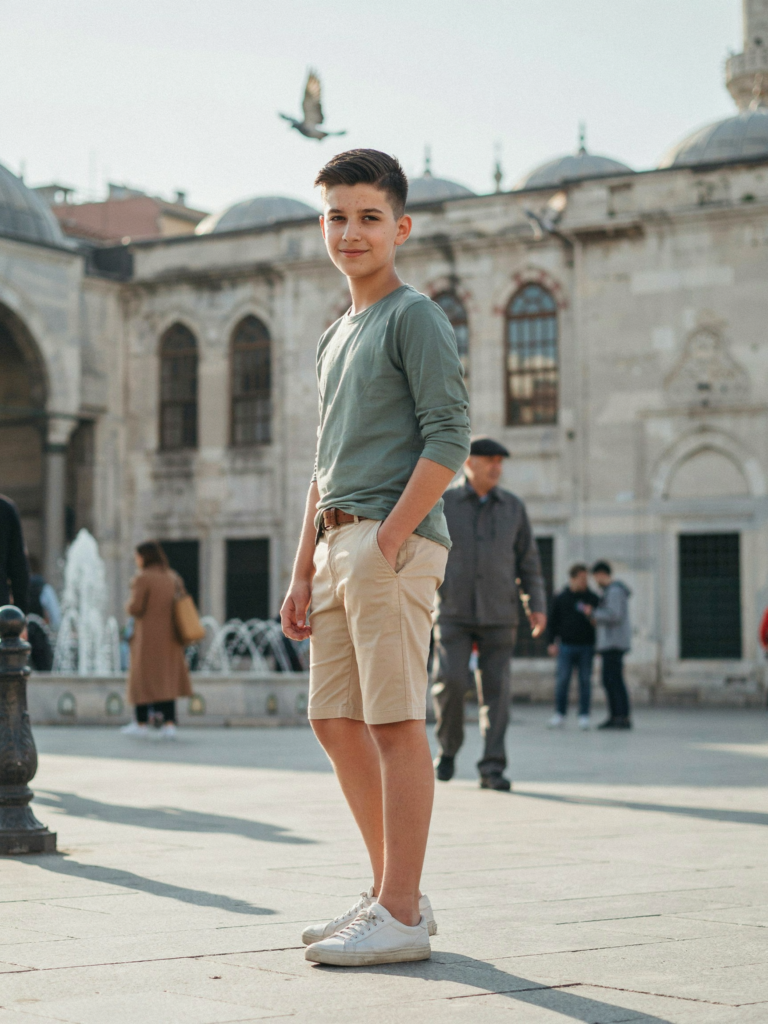
Where the curly top with short sides pushes curls upward, the curly fringe lets them fall forward onto the forehead. It’s a softer, more playful look, and it’s great for boys who have beautiful natural curls and want to show them off without much effort.
The top is kept at about 2.5 to 4 inches so the curls can form fully, and they’re shaped to fall forward over the forehead. The sides can be a taper, a low fade, or kept a little longer for a fuller shape.
Ask for: “Keep the curls long on top and shape them to fall forward into a fringe. Low taper on the sides. Please cut dry to see the curl pattern.”
The real work is in keeping curls healthy and defined:
- Use a sulfate-free shampoo and a moisturizing conditioner.
- Apply curl cream or a light gel to soaking-wet hair, then scrunch.
- Air-dry or use a diffuser on low heat.
- Refresh second-day curls with a spray of water and a little cream.
The curly fringe works for boys with loose to medium curls. Tightly coiled hair may do better with a shorter shape. Keep an eye on the fringe length so it doesn’t sit in the eyes. A trim every 5 to 6 weeks is usually enough.

18. Short Pompadour
The pompadour is famous for its dramatic, swept-back volume, a look made popular by rock and roll stars in the 1950s. For boys, a full pompadour can be too much work, but the short pompadour keeps the classic shape in a smaller, easier package.
The top is left at about 2 to 3 inches and styled up and back, with a smooth lift at the front. The sides are short, usually a taper or fade, so the volume on top becomes the focus.
This cut is a good fit for older boys who enjoy styling and want something that looks sharp for special occasions. It’s also a favorite for weddings and family photos because it looks clean and classic without being stiff.
How to style a short pompadour:
- Towel-dry the hair and apply a little pre-styling spray at the roots.
- Blow-dry the front upward and back using a round brush.
- Work a medium-hold, low-shine pomade through the top.
- Comb the front up and back, then smooth the sides.
Thick, straight hair is ideal. Wavy hair adds natural volume that helps. Fine hair can struggle to hold the shape, so a volumizing product makes a big difference. Plan trims every 3 to 5 weeks to keep the sides tight and the shape defined.

19. Mohawk Fade
The mohawk fade is the boldest style on this list. The sides are faded down, often all the way to the skin, while a strip of longer hair runs down the center of the head. Compared to a traditional mohawk with fully shaved sides, the fade adds a smoother, more modern transition.
It’s a confident look and suits boys who love to stand out. Before booking, check the school’s grooming policy, since some schools don’t allow mohawks. If that’s an issue, the faux hawk is a safer alternative with a similar feel.
Barber instructions: “Mid or high skin fade on both sides, leaving a strip about 2 to 3 inches wide down the center, 2 inches long, blended into the back.”
Styling options:
- Spiked: strong-hold wax, pulled up into points.
- Textured: matte clay, pushed up loosely for a softer look.
- Curly: leave natural curls on top for an easy, standout version.
Because the sides are so short, this cut needs frequent upkeep, every 2 to 3 weeks, to keep the fade clean. It also means extra sun exposure on the scalp, so a cap is useful during hot weather. For a fun summer haircut, though, few styles make as much of a statement.

20. Modern Bowl Cut
The bowl cut used to be the haircut every kid dreaded, famously done at home with an actual bowl. The modern version is a completely different story. Today’s bowl cut keeps the rounded shape and forward fringe, but adds texture on top and a fade or undercut on the sides, turning a childhood joke into one of the trendiest boys’ haircuts around.
The top is kept at around 2.5 to 4 inches and cut with lots of texture so it looks soft and full, not like a helmet. The fringe falls forward over the forehead, and the sides are faded or cut short underneath, which keeps the shape from looking bulky.
What to tell the barber: “Modern textured bowl cut, low or mid fade underneath, long textured top falling forward, soft fringe above the eyebrows.”
This cut works best on thick, straight hair, which holds the rounded shape well. Wavy hair gives it a relaxed, more natural look. Very curly hair usually won’t hold the bowl shape, so a curly fringe might suit better.
Styling is simple: blow-dry the hair forward, apply a small amount of matte clay or texture spray, and gently separate the pieces with your fingers. Keep the fringe out of the eyes and the fade tidy with trims every 3 to 4 weeks.
Conclusion
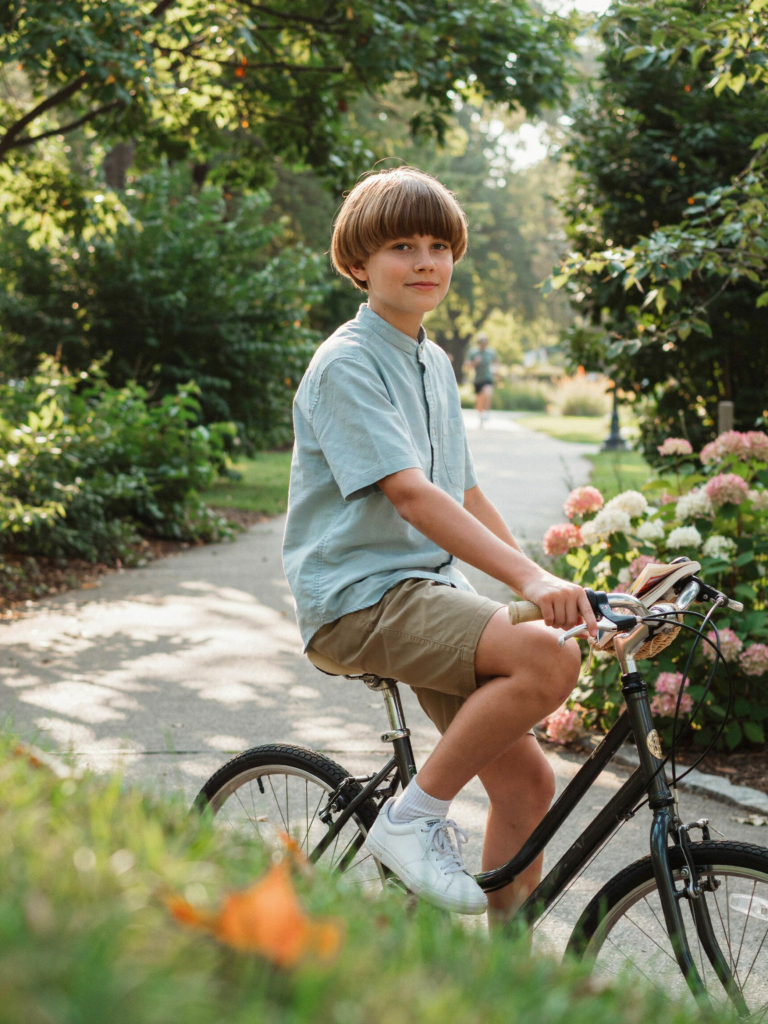
The best haircut for your son is the one that fits his personality and your daily life. If mornings are rushed, a crew cut, Caesar cut or classic short haircut will save you a lot of stress. If he enjoys styling his hair, a quiff, pompadour or faux hawk gives him room to experiment. And if he has natural curls or thick straight hair, there are cuts on this list designed to make the most of what he already has.
A few things make any haircut work better: bring a photo to the barber, be clear about lengths and guard numbers, check your school’s grooming rules before trying anything bold, and keep up with regular trims. Most boys’ haircuts look their best when refreshed every 3 to 6 weeks.
Most importantly, let your son have a say. A haircut he feels good about gives him a little extra confidence walking into class, and that matters more than any trend.
Frequently Asked Questions
What is the most popular haircut for boys right now?
Textured crops, low fades with a textured top and the modern bowl cut are among the most requested styles. They look current, suit most hair types and don’t need much styling.
How often should boys get a haircut?
Most boys need a trim every 3 to 6 weeks. Short cuts and high fades show growth faster and need more frequent touch-ups, while longer layered styles can go 6 to 8 weeks.
Which haircuts are best for school?
Classic short cuts, crew cuts, Ivy League cuts, side parts and taper fades are safe choices for almost any school dress code. Mohawks, hard parts and shaved designs may not be allowed everywhere, so check the rules first.
What haircut is best for a boy with curly hair?
A curly top with short sides, a curly fringe or a taper fade with a textured top all work well. The key is keeping enough length on top, usually 2 to 3 inches, so the curls can form properly.
What’s the difference between a fade and a taper?
A taper only shortens the hair at the sideburns and neckline, leaving length on the sides. A fade blends the whole side area gradually, often down to the skin, for a sharper and more noticeable look.
What’s the easiest haircut for a boy who doesn’t like styling his hair?
The crew cut, Caesar cut and classic short haircut need almost no styling. Most days, a quick run of the fingers is enough.